How Easy Is It To Grow Onions in a Garden?
Onions make for an excellent addition to vegetable gardens in Round Rock, Texas. Here, we show you how easy it is to grow onions in a garden.
Gardening has seen a wonderful resurgence, with more families and communities digging in to cultivate their own food. For those in Central Texas, the unique climate offers a fantastic opportunity to grow various produce, and onions are one of the most rewarding and straightforward crops to start with. But how easy is it to grow onions in a garden?
This guide will answer that question and more as we walk you through everything you need to know, from selecting the right onion varieties to harvesting and storing your crop. By the end, you’ll feel confident in your ability to grow delicious, homegrown onions that your family can enjoy.

Choosing the Right Onion Varieties for Texas
Before you plant, it’s crucial to select the right type of onion for our climate. Agricultural scientists categorize onions by the amount of daylight they need to form bulbs.
In Central Texas, we must plant “short-day” varieties. These types of onions begin to form bulbs when daylight lasts for 10 to 12 hours, which aligns with our fall and winter planting season. Planting “long-day” varieties, which require 14 to 16 hours of daylight, will result in lush green tops but no bulbs.
Recommended Varieties
Some of the most successful and popular short-day varieties for Central Texas include the ‘Texas Supersweet’ and the ‘1015Y Texas Legend’. The ‘Texas Supersweet’ is famous for its large size and mild, sweet flavor, making it perfect for salads and sandwiches. The ‘1015Y’ features superior disease resistance and an exceptionally sweet taste. You can purchase these as seeds or as small starter plants (transplants) from local nurseries and garden centers throughout Williamson County.
Preparing Your Garden for Onions
It is easy to grow onions in a garden with the right preparation. Onions thrive in a spot that receives at least six to eight hours of direct sunlight per day.
Good soil is equally important. Onions prefer loose, well-draining soil that is rich in organic matter. If you have the dense clay soil common in Central Texas, you will need to amend it.
Soil Preparation
To improve your soil, work in several inches of compost or well-rotted manure. This will add vital nutrients and improve soil texture and drainage, preventing onion bulbs from rotting. The ideal time to plant onions in our area is from October through December. Preparing your garden bed a few weeks ahead of planting gives the amendments time to integrate into the soil.
Planting Onions
You can start onions from seeds or from transplants. Starting from seeds is more economical but requires more time and effort. For most home gardeners, using transplants is the easier and more reliable method. These small, dormant onion plants are ready to go directly into your garden bed.
Spacing and Depth
When planting, space onion transplants 4 to 6 inches apart to give the bulbs enough room to grow. Plant them about one inch deep, covering the roots well, but not burying the base of the plant too deeply. Planting too deeply can inhibit bulb formation. Immediately after planting, give them a thorough watering to help settle the soil around the roots and reduce transplant shock.
Caring for Your Onions
Once your onions are in the ground, consistent care will help them grow into large, healthy bulbs. Onions have shallow root systems, so they need regular watering to thrive, especially during dry spells.
Watering and Fertilizing
Aim to provide about one inch of water per week. You can check the soil moisture by touch. Place your finger about an inch deep into the soil; if it feels dry, it’s time to water.
As for feeding, onions are heavy feeders. Apply a balanced, nitrogen-rich fertilizer every two to three weeks during their active growing period. This encourages lush top growth, which directly relates to the size of the bulb.
Weed Control
Keeping your onion patch free of weeds is also critical. Weeds compete for water, nutrients, and sunlight. Since onions have shallow roots, be careful when weeding by hand or with a hoe to avoid disturbing the plants. A layer of mulch can help suppress weeds and retain soil moisture.
Common Pests and Diseases
Even with the best care, you might encounter some pests and diseases. Thrips are tiny insects that can cause silvery streaks on the leaves and stunt plant growth. Onion maggots are another common pest that bores into the bulbs.
You can use insecticidal soap or neem oil as natural control methods. To prevent fungal rot, ensure your soil drains well and avoid overwatering. Proper plant spacing also improves air circulation, helping keep foliage drier and less prone to disease.
Harvesting Your Onions
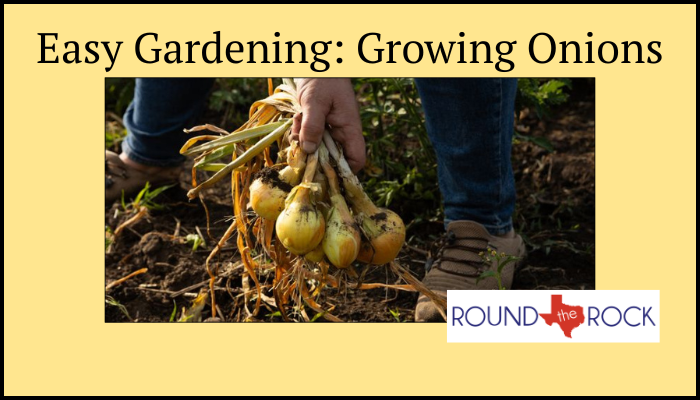
After months of care, it’s time to harvest your crop. You’ll know your onions are ready when the green tops begin to yellow and fall over. This is a natural sign that the plant is no longer growing and is putting all its energy into the bulb. This typically happens in late spring or early summer in Central Texas.
How to Harvest
Stop watering the onions once the tops start to fall over. This helps the bulbs begin to dry out. After about a week, gently pull the onions from the ground. Avoid yanking them, as this can damage their necks and cause rot in storage. On a dry day, use a garden fork to loosen the soil around the bulbs before lifting them.
Curing and Storing Onions
Curing is a proven method for storing onions and extending their shelf life. It allows the necks to dry completely, creating a seal that protects the bulb from moisture and decay.
To cure your onions, lay them out in a single layer in a warm, dry, and well-ventilated location, such as a covered patio or garage. Keep them out of direct sunlight. The curing process can take two to three weeks. You’ll know they are ready when the outer skins are papery, and the necks are completely dry and tight.
Storage Methods
After curing, trim the roots and cut the tops back to about one inch. Store your onions in a cool, dark, and dry place. Mesh bags, pantyhose, or wire baskets work well because they allow for good air circulation. Properly cured and stored, sweet onions like the Texas Supersweet can last for a few months.
Enjoy the Fruits of Your Labor
The best part of growing your own food is enjoying the harvest. Your homegrown onions will have a freshness and flavor that those from the store simply cannot match. Use them in your favorite recipes, from soups and stews to fresh salsas and salads.
We encourage you to start your own onion-growing adventure here in Round Rock. It’s a rewarding project for the whole family and a great way to connect with your food.
As this year’s multiple-personality “winter” weather has us itching to do ALL the Spring things, including gardening, we invited our friends at DiamondB to help us do some thinking and planning.
You know…BEFORE we go spending our life’s savings at the plant nurseries.
(But they are ALL so pretty!)