
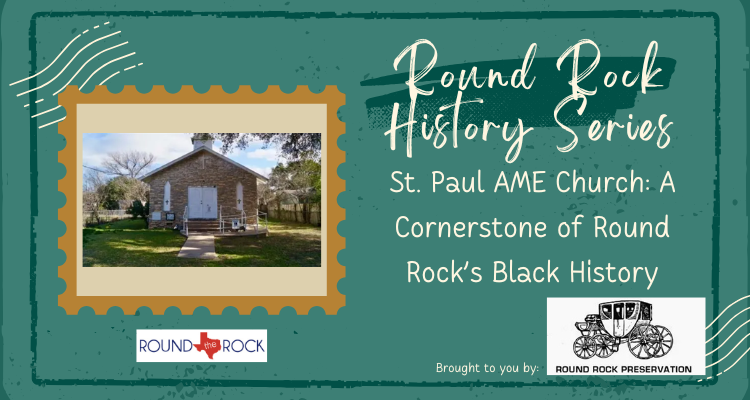
Round Rock History: St. Paul AME Church: A Cornerstone of Round Rock’s Black History
St. Paul African Methodist Episcopal Church (AME) stands as the second oldest and most enduring pillar of Black faith, culture, and community in Round Rock, Texas.
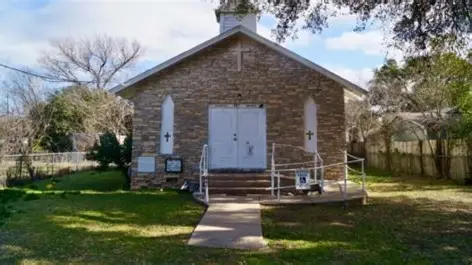
Its roots reach back to the late 1800s, when formerly enslaved families and free Black settlers built homes, farms, and neighborhoods in the Palm Valley and Hopewell areas. In an era marked by segregation, limited resources, and systemic barriers, these families created institutions that affirmed their dignity and strengthened their community. St. Paul AME quickly became one of the most important of those institutions.
The church’s origins are tied to the broader AME movement, founded in 1816 by Bishop Richard Allen, whose mission centered on spiritual empowerment, education, and social justice for African Americans. As Black families migrated throughout Texas after the Civil War, AME congregations emerged as safe havens; places where people could worship freely, organize, learn, and support one another. St. Paul AME in Round Rock grew from this tradition, offering both spiritual grounding and practical support to families navigating the challenges of Reconstruction and Jim Crow.
By the early 20th century, St. Paul AME had become a central gathering place for Black residents in the Palm Valley community. The church hosted worship services, revivals, weddings, funerals, and community meetings. It also served as a site for education and literacy, supporting children who attended the Hopewell School and other early Black schools in the area. For many families, St. Paul AME was the first place where children learned leadership, public speaking, and the importance of service.
Throughout the mid‑1900s, the church continued to anchor the Black community as Round Rock grew and changed. During segregation, St. Paul AME provided a safe and affirming space where families could gather without fear or discrimination.
As Round Rock began to integrate and expand in the latter half of the 20th century, St. Paul AME remained a steadfast presence. Generations of families continued to worship there, preserving traditions while embracing new opportunities. The church supported youth programs, choir ministries, women’s and men’s groups, and community outreach efforts. It also maintained strong ties to the historic Hopewell Cemetery, where many early church members and community leaders are buried.
In recent decades, St. Paul AME has continued to honor its heritage while engaging in modern ministry. Its members include respected community leaders who serve in education, civic life, historic preservation, and local advocacy. The church has also been a gathering place for community vigils- moments of collective prayer, remembrance, and unity during times of grief, injustice, or community need. These vigils reflect the church’s long‑standing role as a moral and spiritual anchor for Round Rock.
Today, St. Paul AME Church stands as a living testament to endurance, faith, and community strength. It is more than a building; it embodies generations of hope, courage, and collective effort. From its earliest days in Palm Valley to its present role in a rapidly growing city, St. Paul AME continues to shine as a symbol of unity and resilience. Its history reminds us that sacred spaces built by determined hands can shape a community for over a century, leaving a legacy that inspires all who walk through its doors.
Authored by: Tina Steiner, Round Rock Preservation (RRP) Board of Directors
Copy and images provided by Round Rock Preservation.
Exploring how Round Rock came to be!
Discover the rich history of Round Rock through our Round Rock History Series, brought to you by the Round Rock Preservation organization. The series highlights the people, places, and events that shaped our community. From early settlers to significant landmarks, we explore the stories that connect us to the past. Join us as we uncover the moments that made Round Rock what it is today.
Have something you’d like us to consider sharing? Email us!
Click below for more Round Rock history articles!